Stanford’s AI Predicts Future Disease Risk Using Data From One Night of Sleep
For decades, we have viewed sleep primarily as a period of rest and recovery—a necessary “shutdown” for the brain and body to prepare for the following day. However, groundbreaking research from the Stanford University School of Medicine suggests that our sleep is far more than a simple recharge. Instead, it is a complex, data-rich environment that holds the hidden blueprints of our future health. By leveraging the power of artificial intelligence, researchers have discovered that early disease detection technology can now analyze a single night’s sleep to forecast chronic conditions years before the first physical symptoms appear.
The implications of this breakthrough are profound. Imagine a scenario where a routine sleep study doesn’t just check for snoring or apnea, but serves as a comprehensive “check-engine light” for your entire biological system. By utilizing machine learning in healthcare, the Stanford team has developed a model that identifies subtle disruptions in our internal rhythms. These “hidden warnings” are often invisible to the human eye but are starkly clear to an algorithm trained on tens of thousands of clinical sleep records. This transition from reactive to preventative medicine AI marks a significant turning point in how we approach long-term wellness and longevity.
The Science Behind Stanford’s Breakthrough AI Sleep Study
The core of this research lies in the concept of “sleep age.” Just as your biological age can differ from your chronological age based on your physical fitness, your “sleep age” reflects the health of your nervous system and metabolic functions during rest. The AI sleep study Stanford researchers conducted involved training a deep-learning model on over 12,000 polysomnography records. Polysomnography is the gold-standard sleep test that records various physiological parameters simultaneously. By analyzing these records, the AI learned to recognize what “healthy” sleep looks like at every stage of life.
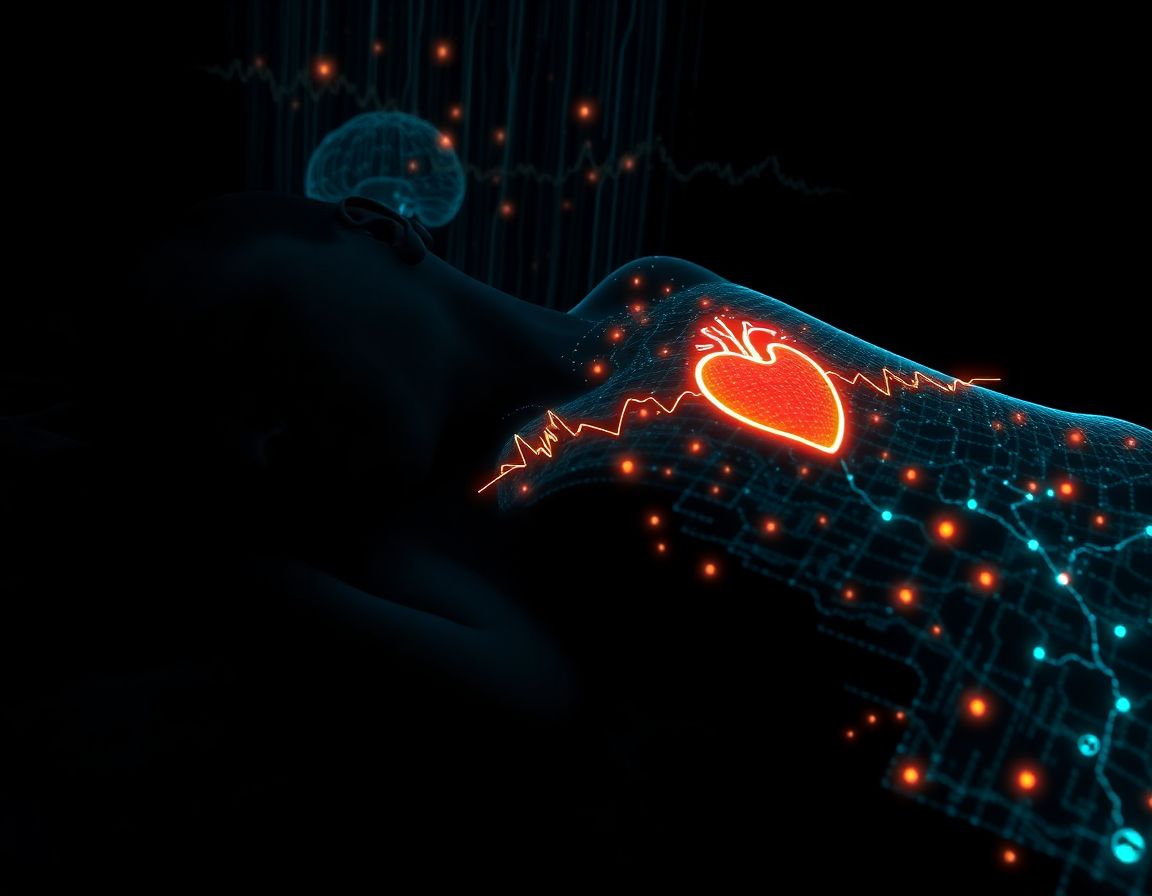
What makes this AI unique is its ability to process overnight polysomnography data at a granular level. While a human technician might look for broad sleep stages (like REM or Deep Sleep), the AI zooms in on the micro-fluctuations within those stages. It looks at the texture of brain waves, the variability between heartbeats, and the precise rhythm of breathing. When the AI detects a “sleep age” that is significantly older than the patient’s actual age, it serves as a red flag. These discrepancies are often the earliest indicators of underlying pathology, long before blood tests or imaging might catch a problem. This physiological signals analysis allows doctors to see the “wear and tear” on the body’s internal systems in real-time.
The researchers discovered that individuals with an advanced sleep age—meaning their sleep patterns resembled those of much older people—were at a significantly higher risk for mortality and chronic illness. The beauty of this system is its efficiency. Traditionally, diagnosing complex conditions required years of monitoring and dozens of expensive tests. Now, through predictive analytics for chronic illness, a single night in a sleep lab can provide a roadmap of a patient’s health trajectory for the next decade. This level of insight was previously unthinkable, but it is now becoming a reality through the integration of advanced computing and clinical medicine.
Decoding Brain, Heart, and Breathing Patterns During Rest
To understand how an AI can predict disease from sleep, we must look at the specific brain heart breathing patterns it monitors. During sleep, these three systems are intricately linked in a “symphony” of biological activity. When one system falters, the others often show subtle compensatory changes. The Stanford AI is designed to detect these dissonances. For instance, the way our heart rate variability changes during REM sleep can reveal a lot about our autonomic nervous system—the part of the brain that controls “fight or flight” and “rest and digest” functions.
The AI focuses on several key areas of sleep architecture and disease correlation:
- Brain Wave Fragmentation: Subtle shifts in the frequency of EEG waves can indicate early signs of neurodegeneration.
- Respiratory Stability: Inconsistencies in breathing depth and rate, even in those without sleep apnea, can signal future metabolic or cardiovascular issues.
- Cardiac Autonomic Tone: The heart’s ability to transition between different rhythms during sleep is a primary indicator of cardiovascular disease risk.
- Movement Patterns: Micro-movements or muscle twitches during specific sleep phases can be precursors to motor-related disorders.
By monitoring these signals, the AI builds a multi-dimensional map of the patient’s health. It isn’t just looking for a single “smoking gun” but rather a constellation of minor abnormalities. In many cases, these abnormalities are so slight that they fall within the “normal” range for human observers. However, the AI can correlate these tiny shifts across thousands of data points. For example, a slightly irregular heart rhythm combined with a specific brain wave pattern might be a specific signature for an impending neurodegenerative disorder. This holistic view of the body’s nocturnal activity provides a level of diagnostic precision that traditional physical exams simply cannot match.
Forecasting Health: From Parkinson’s to Cardiovascular Risks
One of the most exciting aspects of this sleep-based health diagnostics tool is its ability to forecast specific diseases years in advance. The Stanford study highlighted that certain sleep signatures are highly predictive of conditions like Parkinson’s disease and Alzheimer’s. In the case of Parkinson’s, researchers found that REM sleep behavior disorder—where individuals act out their dreams—can manifest up to a decade before the tremors and motor symptoms typical of the disease appear. The AI can detect the earliest, most subtle versions of these disruptions, allowing for intervention in the “prodromal” or pre-symptomatic phase.
Furthermore, the AI’s predictive power extends to heart health. Chronic sleep fragmentation and poor sleep quality are known drivers of inflammation and hypertension. By analyzing the cardiovascular disease risk markers hidden in sleep data, the AI can identify individuals who are on a fast track toward heart failure or stroke. This is particularly valuable because it allows for lifestyle interventions—such as diet changes, stress management, or targeted medication—at a time when the damage is still reversible. Instead of treating a heart attack after it happens, doctors can address the biological trends leading up to it.
The potential for early disease detection technology to transform neurology is equally significant. Many neurodegenerative diseases are characterized by the buildup of toxic proteins in the brain, which often occurs because the brain’s “waste disposal system” (the glymphatic system) primarily functions during deep sleep. If the AI detects that a patient is consistently missing out on these critical deep-sleep phases, it can flag them for high risk of cognitive decline. This proactive approach gives patients and doctors a crucial “window of opportunity” to implement brain-healthy habits and explore experimental therapies before cognitive impairment becomes irreversible.
The Future: Moving AI Diagnostics from Clinics to Homes
While the initial Stanford research was conducted using high-end clinic data, the ultimate goal is to bring this predictive analytics for chronic illness to the average person’s bedroom. We are currently seeing a surge in consumer-grade wearable devices that track sleep, but most of these provide only surface-level data. The next frontier involves integrating the sophisticated algorithms developed at Stanford into these wearables, or creating simplified “at-home” patches that can capture clinical-grade physiological signals analysis.
There are several challenges and opportunities on the horizon for this technology:
- Accessibility: Making high-level AI sleep analysis available to everyone, not just those with access to elite university hospitals.
- Data Privacy: Ensuring that the highly personal data captured during sleep is protected and not used by insurance companies to penalize at-risk individuals.
- Integration: Creating a seamless pipeline where sleep data is automatically sent to a primary care physician if the AI detects a significant health shift.
- Continuous Monitoring: Moving from a “one-night snapshot” to a longitudinal view of health, where the AI tracks how your sleep age changes over years.
As this technology matures, the definition of a “physical exam” will likely change. Rather than an annual visit to the doctor for a 15-minute check-up, our health may be monitored 365 nights a year by an invisible, silent guardian. This shift toward continuous, preventative medicine AI could significantly reduce the global burden of chronic disease. By catching “hidden warnings” while we sleep, we can take control of our health during our waking hours, potentially adding years of healthy, vibrant life to our future. You can read more about similar advancements in medical AI at the Stanford Medicine News Center or explore deep technical studies in Nature.
Frequently Asked Questions
1. Can current smartwatches do what the Stanford AI does?
Not yet. While smartwatches can track basic sleep stages and heart rate, they lack the multi-channel overnight polysomnography data (like EEG brain waves) required for the level of disease prediction found in the Stanford study. However, future wearables may incorporate more sensors to bridge this gap.
2. Which diseases can the AI currently predict?
The research has shown strong results in predicting neurodegenerative disorders like Parkinson’s and Alzheimer’s, as well as cardiovascular disease risk and general mortality. It also helps identify metabolic issues and potential respiratory failures.
3. Does a “bad night of sleep” mean I am sick?
No. The AI looks for persistent patterns and biological signatures, not a single night of poor rest caused by stress or caffeine. It identifies systemic issues in sleep architecture and disease markers that persist over time.
4. How soon will this technology be available to the public?
The AI models are currently used in research and some clinical settings. Moving them to widespread medical practice or consumer devices requires further validation and regulatory approval, which could take several years.
5. Why is sleep better than blood tests for these predictions?
Sleep provides a unique look at the “functional” state of the nervous and cardiovascular systems. While a blood test shows a snapshot of chemistry, sleep data shows how your body’s systems interact and perform under the stress of biological maintenance, revealing early physiological signals analysis that chemistry might miss.
Conclusion
The work coming out of Stanford is a testament to the power of machine learning in healthcare. By turning our most vulnerable and quiet hours into a source of vital health intelligence, researchers are opening a new door in preventative medicine AI. The ability to spot hidden disease warnings during a single night of sleep offers a glimpse into a future where “getting sick” is no longer a surprise, but a preventable event. As we continue to refine these early disease detection technology tools, we move closer to a world where our beds are not just places to rest, but the ultimate diagnostic tools for a long and healthy life.